A “Less is More” Approach to Healthcare Wayfinding
By Shaghayegh Kalantari

Designing Intuitive Healthcare Wayfinding at St. Francis Memorial Hospital
DEXD has been working as the interior wayfinding and signage consultant for the redevelopment and expansion of St. Francis Memorial Hospital in Barry’s Bay, Ontario. The interior wayfinding strategy follows a “less is more” philosophy — supporting both the architectural vision and the customer experience without overwhelming the environment with excessive signage elements.
Rather than relying solely on signage to guide navigation, the design approach focused first on understanding the architectural layout, interior material palette, and color strategy to help create intuitive orientation throughout the hospital environment. Signage was then layered carefully within the space to reinforce navigation, support accessibility, and contribute to a calm and welcoming healthcare experience.
Supporting Patient Journeys
The redevelopment includes the expansion of the Emergency Department and renovation of the Ambulatory Care Clinic, introducing new patient entry conditions, updated circulation paths, and refreshed healthcare environments. The wayfinding strategy supports multiple public access points, including the Emergency Department Entrance, Emergency–Paramedic Route, and Patient Ambulatory Care Clinic Entrance, each responding to different patient journeys and operational needs.
Within a compact community hospital environment undergoing redevelopment, maintaining clear and intuitive navigation becomes especially important. The design approach focused on creating a simple, highly visible, and integrated signage system that helps patients, visitors, and staff move through the facility with confidence during and after construction phases.
Integrated Signage Strategy
Working collaboratively with the architect, client team, consultants, and fabricators, the wayfinding strategy aimed to integrate signage seamlessly within the broader healthcare environment rather than compete visually with it. The process included the development of interior sign types, Revit-based coordination, message schedules, and location planning tailored to both operational functionality and patient experience.
To support long-term flexibility within the healthcare environment, changeable room identification signage was incorporated into the system, allowing spaces to adapt more easily to future operational and departmental changes while maintaining consistency throughout the facility.
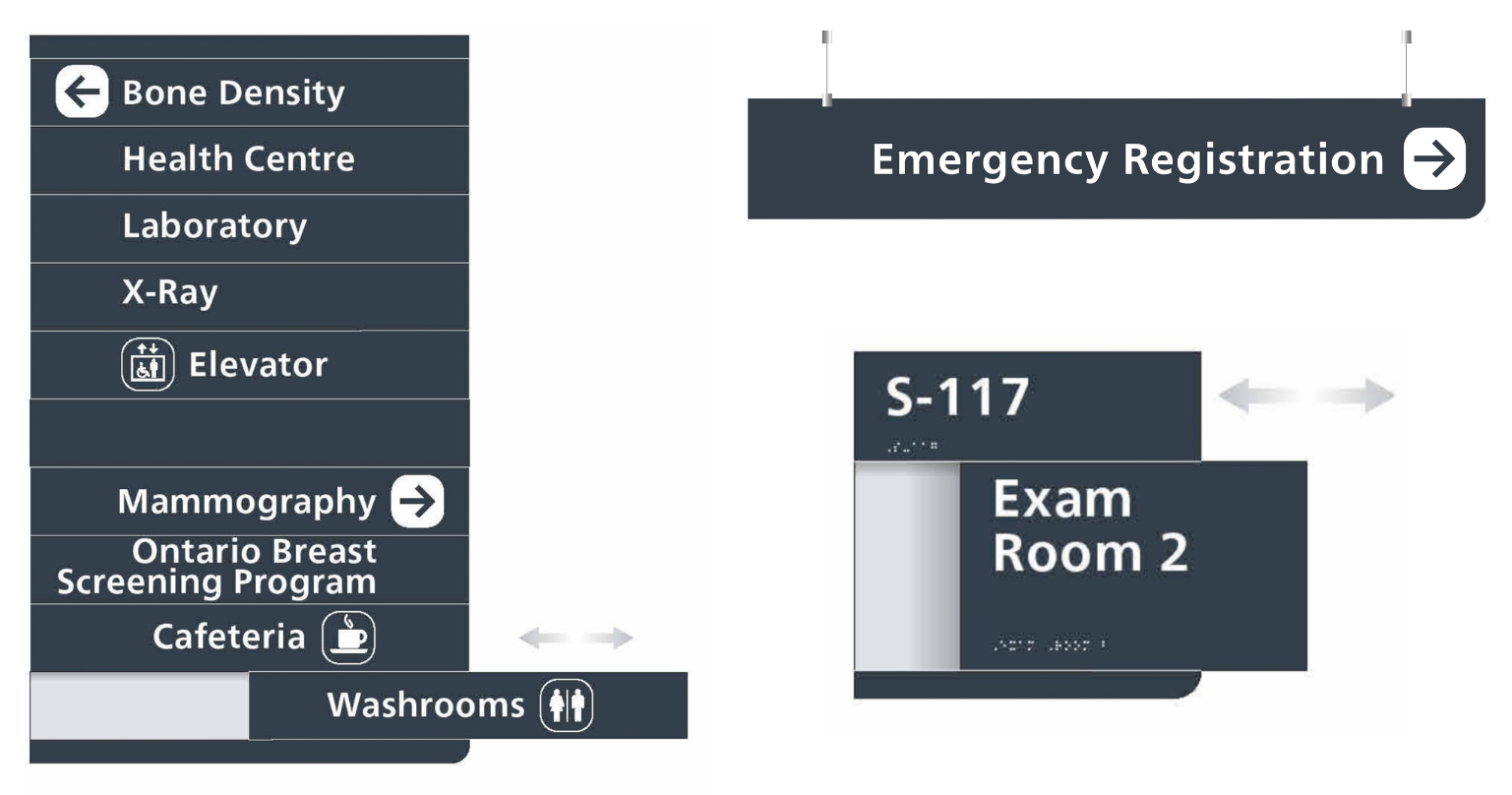
As part of a rural healthcare redevelopment project, the work explores how thoughtful and integrated wayfinding can support clarity, accessibility, and comfort while respecting the character and scale of a community hospital environment.